/software/alpha/

Run Tessera on your own models.

The alpha goes to a small group of working analysts. Tell us what you solve and what you would try first. We read every application ourselves.

About 8 minutes

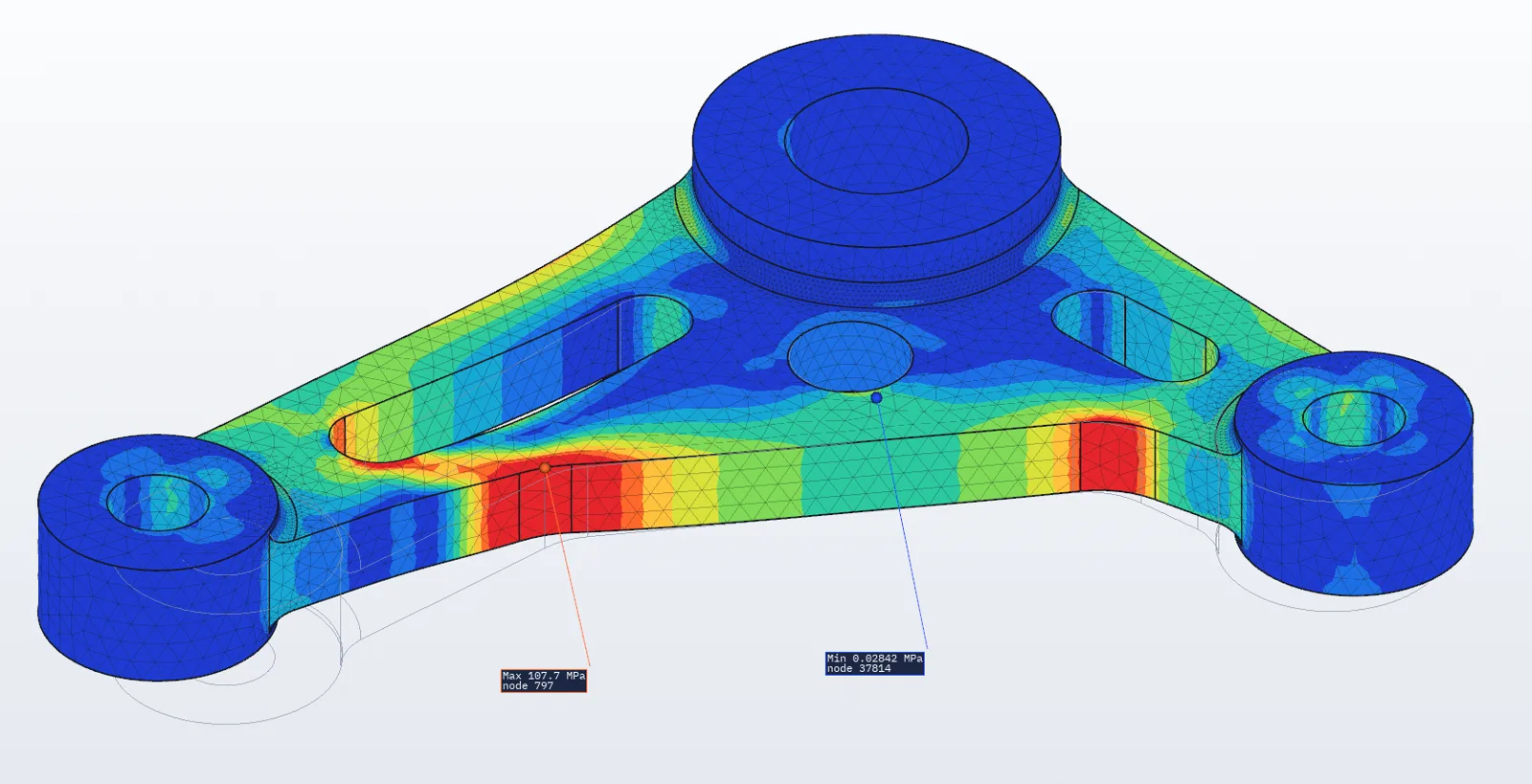
A steel bell crank solved in Tessera, coloured by von Mises stress, with the peak and the lowest value labelled on the part.

What you getThe full program, every build as it lands, and a direct line to the people writing it.
What we askUse it on real work. The alpha build reports how the program is used, and you tell us where it stopped you.
How we chooseA spread of industries and analysis types, so every part of the program gets used in anger.
When it opensWe open the alpha in stages. Everyone who applied hears from us when it does.
1 of 6

You

So we know who we are talking to. A work address helps us tell engineers from mailing lists.

2 of 6

Your analysis work

This is how we spread the seats: we want every area of the program in the hands of someone who uses it for a living.

Years doing finite element analysis
What you solve with today
Choose all you use. We ask so we can speak your vocabulary, and so the import paths you need get tested.
Analyses you run
How often you run an analysis optional
A typical model of yours optional
CAD you receive optional
3 of 6

What you would try

The most useful part of the form. One real job, in your own words, tells us more than every box above.

No drawings or customer names needed. A sentence or two on the physics is enough.
Areas of Tessera you want to push
Would you check Tessera against results you already trust optional
4 of 6

Your computer

The alpha installs on your own machine. We ask so the first build you get is one that runs.

Operating system
Memory
Can you install software yourself optional
Is the machine allowed online optional
5 of 6

The assistant

An add-on that sets up and runs analyses from a description in words, through an AI model you connect yourself. Tessera works the same without it.

Would you use it optional
Which model would you connect optional
You bring the key. It stays in your system's credential store and never reaches us.
6 of 6

Feedback and terms

The alpha only works if we hear back. Here is what we ask in return for the seat, in plain words.

Hours a week you can give it

What the alpha build reports

This is how we see where Tessera works and where it gets in the way, without asking you to fill in reports. It is part of every alpha seat, so we ask you to agree to it now. What it means:

What it records
Which commands, panels and analysis types you use and how often, how long a session lasts, the size of each model (elements and degrees of freedom), solve times, and the warnings and errors the program shows you, including crashes.
What it never records
Your geometry or CAD files, meshes, results, file and folder names, the values you type in, what you write to the assistant, or your API key.
Where it goes
Over an encrypted connection to BadgerMecX, linked to your alpha seat. Only the people building Tessera see it, and only to improve the program.
How long, and your say
We delete it [N months] after the alpha ends. You can ask us at any time what was recorded for your seat, or to delete it.

A copy of your answers goes to your inbox. When the alpha opens we write to everyone who applied, and if you are selected for a seat we contact you to set it up.

  1. We read itEvery application, by the people who write the program.
  2. The alpha opensWe write to everyone who applied, selected or not.
  3. If you are selectedWe contact you with a download link, your seat and a first-hour guide.
  4. You use itThe program reports how it is used, and you have a direct address for anything that cannot wait.